Anatomy of a SaaS Demo Animation That Closes Deals
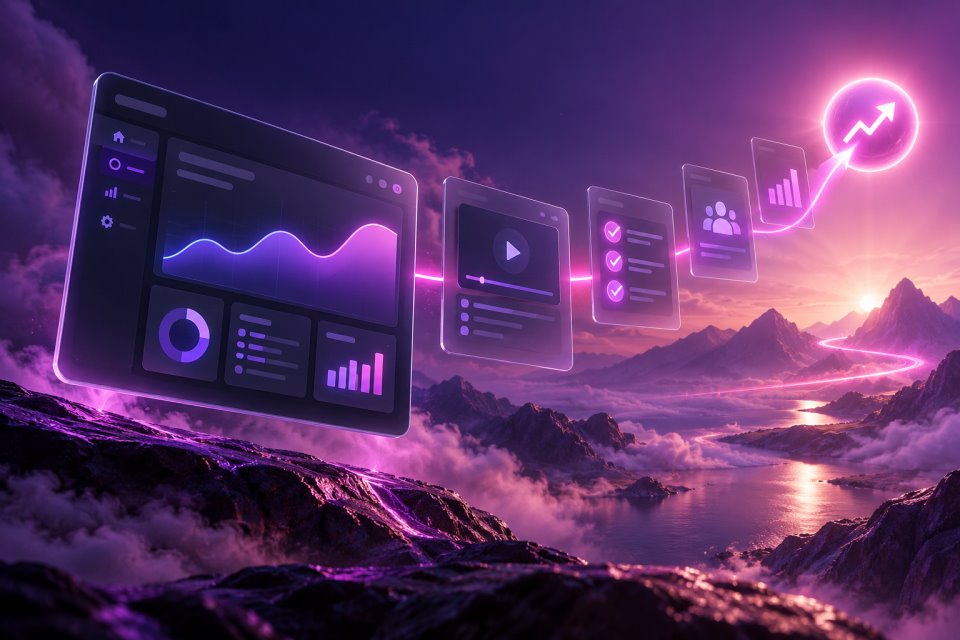
Most SaaS product animation briefs arrive with a feature list and a request to "show what the product does." That request, followed literally, produces the single most common failure mode in B2B video: a feature tour that's technically accurate and completely forgettable.
Buyers don't remember feature tours. They remember the moment a video showed them a problem they personally recognised, followed by a resolution that felt inevitable. That's the structure we build toward on every SaaS demo animation — not a tour, an outcome story.
Why Feature Tours Underperform
A feature-by-feature walkthrough treats every capability as equally important, because from inside the product team, they often feel that way. But a buyer evaluating your software in a 90-second video doesn't have the context to weigh eight features against each other — they need one clear reason this product solves their specific problem, delivered fast enough to hold their attention.
The 90-Second Structure We Use
- 0–10s — The recognisable problem. Not an abstract pain point, a specific, visually concrete moment of friction the target buyer has personally lived through.
- 10–25s — Why existing solutions fall short. Brief, never mean-spirited toward competitors — just enough to establish why "we'll just keep doing it the old way" isn't working.
- 25–70s — The product as the resolution. Not a tour of every screen — a focused walkthrough of the single workflow that solves the problem established in the first ten seconds, shown as an outcome rather than a feature list.
- 70–90s — Proof and next step. A concrete result (time saved, revenue recovered, a specific customer outcome) followed by one clear call to action.
"Nobody forwards a feature tour to their boss. They forward the thirty seconds that made them feel understood."
Why This Structure Closes Deals
Sales teams don't send video links because they're pretty. They send them because a well-built demo animation does something a sales call can't do at scale — it pre-qualifies and pre-sells a prospect before a human ever gets on the phone. A prospect who's watched a 90-second video that named their exact problem arrives at the discovery call already halfway convinced.
That's the metric we actually optimise for on SaaS animation projects: not views, not even watch-through rate in isolation, but whether sales teams keep the video in active rotation six months after delivery. A video that gets quietly retired after the launch push failed at its actual job, regardless of how it tested initially.
Investor Pitch Animation Follows the Same Logic
The same structure — recognisable problem, why now, the resolution, proof — underpins investor pitch animation too, just compressed further and with the "proof" section carrying more weight (traction numbers, market size, team credibility). If your product animation and your investor deck animation feel like they're telling two different stories about the same company, that's usually a sign the underlying narrative was never locked down before either video went into production.
Have a project like this in mind?
Tell us the goal — we'll scope it honestly and give you a fixed-price proposal within 48 hours.
Start a Project